Short answer: Choose vinyl if you want a fence you never paint and you plan to stay put; choose wood if you want the lowest starting price or a natural look and don’t mind sealing it every few years. Both work in Southeast Idaho when they’re installed right.
Side-by-Side Comparison
| Vinyl | Wood (cedar or treated pine) | |
|---|---|---|
| Upfront cost | Higher | Lower |
| Upkeep | Rinse with soap and water | Seal or stain every 2–3 years; replace warped boards |
| Typical lifespan | 20–30+ years | 10–20 years, depending on care |
| Rot and insects | Not affected | Cedar resists; pine needs treatment |
| Privacy | Solid panels, no gaps | Gaps can open as boards shrink (board-on-board avoids this) |
| Look | Clean, uniform; wood-grain textures available | Natural; stain to any color |
| Repairs | Replace a panel section | Replace a single board |
| Warranty | Up to 50 years from Country Estate | Workmanship only |
How Idaho Weather Treats Each One
Freeze and thaw. Wood soaks up snowmelt, then swells and shrinks through the winter, which loosens fasteners and opens gaps. Vinyl doesn’t absorb water, so it stays straight.
Sun. Our high-elevation summer sun grays and dries unsealed wood quickly. Quality vinyl is UV-stabilized to resist fading and yellowing.
Wind. Both need posts set deep in concrete. A solid privacy fence of either material catches a lot of wind, so post spacing and depth matter more than material.
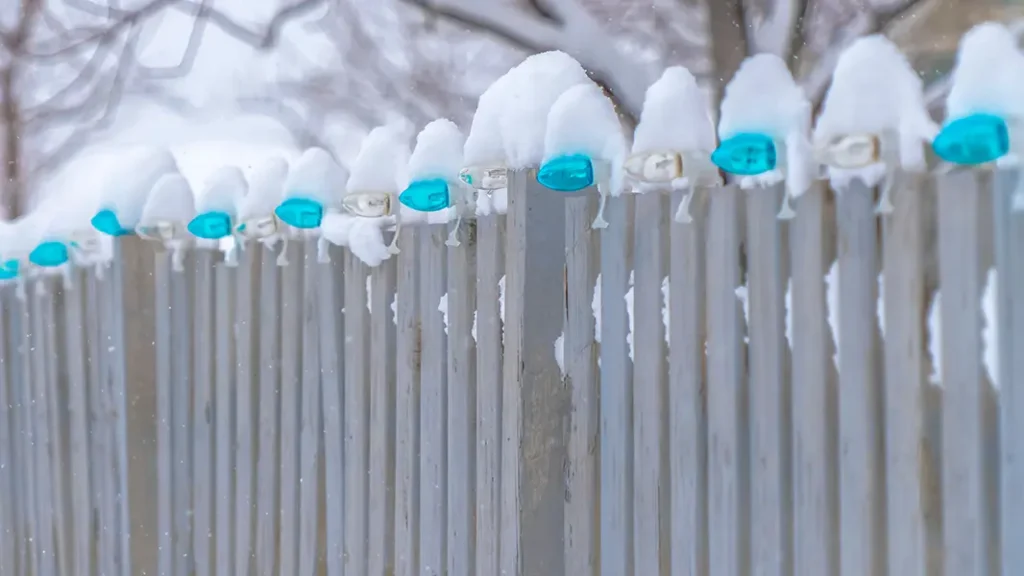
Heavy snow. Vinyl’s one weak spot: a deep, wet drift piled against the panels can crack them. Clear large drifts after a big storm. Wood handles the weight but holds the moisture.
What It Costs Over 20 Years
Wood wins on day one. Add sealing every two to three years, board replacements and possibly a full replacement before year 20, and the gap closes. For exact numbers on your yard, see our wood fence cost guide and vinyl fence cost guide.
Which One We’d Recommend
- Backyard privacy, staying 7+ years: vinyl.
- Tight budget or selling soon: pressure-treated pine.
- Natural look, willing to maintain: cedar.
- Pool enclosure: vinyl, because it won’t splinter and meets pool-code designs.
- Horses or large acreage: vinyl ranch rail.
Frequently Asked Questions
Can vinyl look like wood?
Yes. Country Estate offers streaked and embossed wood-grain finishes in almond and gray that read as wood from a few feet away, with a less glossy surface.
Which is better for privacy?
Vinyl privacy panels have no gaps and don’t shrink. A wood fence gives the same privacy if it’s built board-on-board.
See Both in Person
We bring vinyl color samples and wood options to every free estimate. Request a quote, or browse finished projects in our job gallery.